
You study grammar for months. You practice speaking daily. You memorize thousands of words…
Yet you still can’t break past Band 6.5.
Here’s why: You’re using the same boring, basic vocabulary as everyone else. While you say “good” and “important,” high-scorers use words that make examiners lean forward and take notice.
Now you can increase your IELTS® score in a short time by learning word phrases and exam strategies.
But first, I want to share a personal story.
A few years back, I was really struggling with my IELTS® exam as a student who wants to study outside of my country. No matter how hard I tried, I got low band score. It was frustrating because I needed a higher score required to study abroad. I felt stuck and didn’t know what to do.
I remember the days when complex English vocabulary was my biggest obstacle. Preparing for the exam, I’d spend hours on words that seemed endless and confusing.
It felt like being in a maze with no exit. The confusion about where to start and how to prepare for English exams was a major setback for me. It was like navigating a road with no signs. Can you imagine that?
Students face common problems below with IELTS Vocabulary:
1
Limited Vocabulary Range
Students often have a restricted range of vocabulary, limiting their ability to express ideas clearly and effectively across different topics in the IELTS exam. This can result in lower scores in the speaking and writing sections, where a diverse vocabulary is essential.
In an essay or speaking card about “Online Learning and Distance Education” a student with a restricted vocabulary might struggle to vary their language and create related word phrases. For example, they might need to use the phrases like “virtual classrooms“, “digital literacy“, “online assessment platforms” when creating ideas for writing or speaking. This can make their writing or speaking more engaging and dynamic, leading to higher scores for lexical resource.
2
Synonyms and Antonyms
Identifying and using synonyms and antonyms correctly is a common difficulty. This skill is crucial for reading comprehension and writing tasks, where varied vocabulary is assessed.
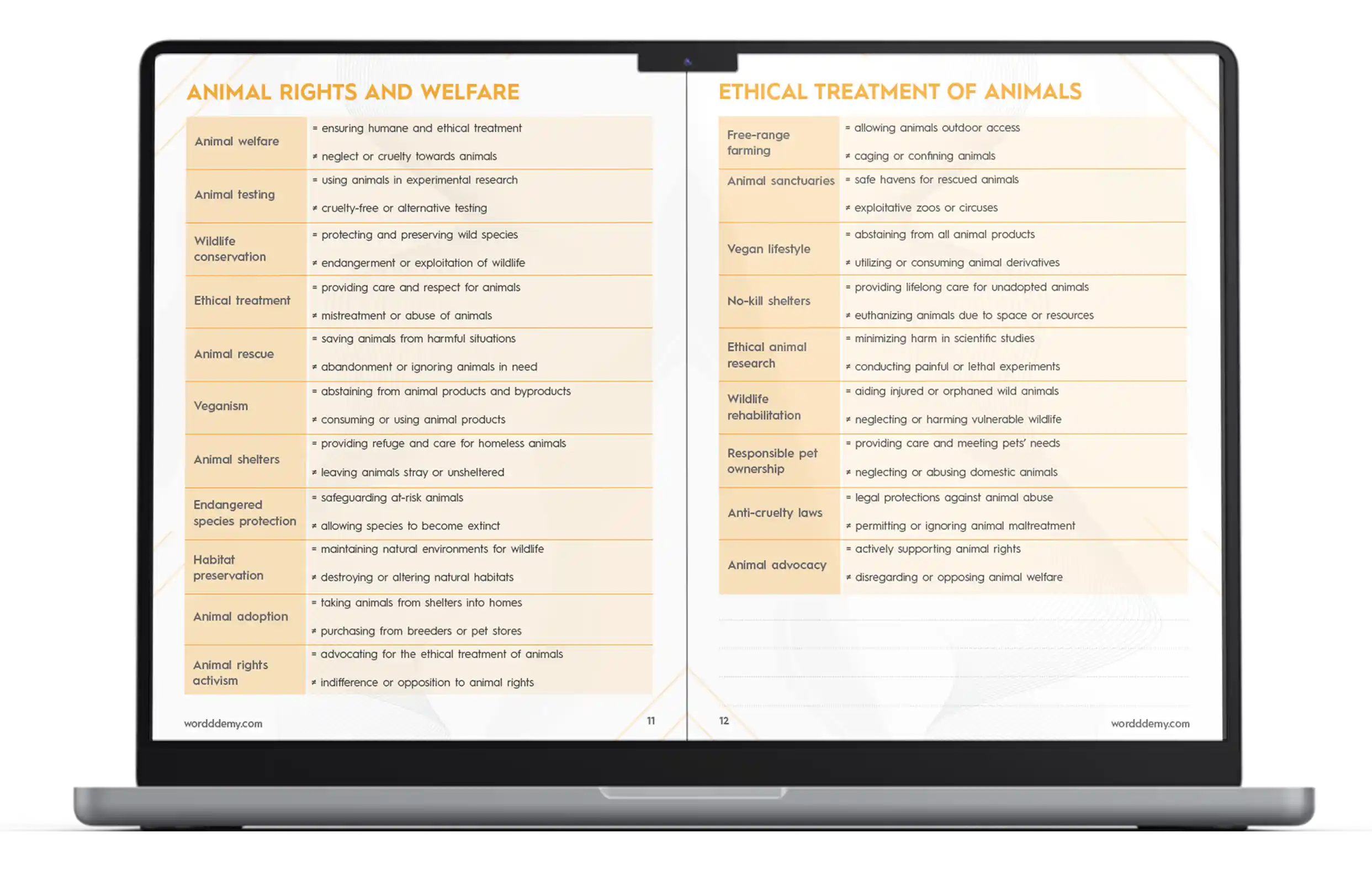
For instance, in discussing education, “virtual classrooms” can be synonymous with “utilizing digital platforms for teaching and learning,” providing a clear picture of online education. Conversely, it can be contrasted with “conducting lessons in physical, in-person settings,” highlighting differences between online and traditional methods. This helps students navigate varied contexts more effectively, crucial for explaining ideas and success in all IELTS tasks.
3
Difficulty with Advanced Vocabulary The IELTS exam includes advanced and academic vocabulary that may be unfamiliar to students, especially those without exposure to academic English. This can hinder comprehension and the ability to respond to reading and writing tasks that require academic language.
For example, in the reading section, a student might struggle to understand a passage discussing “socioeconomic factors” or “ecological sustainability,” impacting their ability to answer related questions accurately. Similarly, in the writing section, a student might find it challenging to articulate complex ideas without the appropriate vocabulary, affecting the overall coherence and cohesion of their essay.
4
Incorrect Word Usage and Implementation
Many students struggle with using words appropriately in context, often leading to incorrect usage and confusion. Misuse of words can affect the clarity and accuracy of responses, impacting scores negatively.
For example; a student might use the word “virtual” instead of “augmented” when discussing the types of online classrooms. Incorrect Usage: “In augmented classrooms, students can interact with their teachers in real-time through video calls.” Correct Usage: “In virtual classrooms, students can interact with their teachers in real-time through video calls.”
5
Lack of Contextual Learning Memorizing word lists without understanding their context leads to ineffective vocabulary use. Contextual learning is crucial for mastering vocabulary for the IELTS exam. Learning words through example word phrases, reading comprehensions, and real-life usage can provide context.
For instance, simply memorizing the word “sustainable” may not be as beneficial as understanding its usage in phrases like “sustainable development” or “sustainable energy practices.” This kind of contextual learning can be achieved through example word phrases, reading comprehensions, and observing real-life usage of words in various contexts.
A Game-Changer Strategy for Exam Preparation
Balancing school, daily life, and exam preparation, I desperately needed a flexible learning solution. I was tired of outdated, uninspiring study materials that didn’t resonate with my learning style. Traditional classes were rigid and inconvenient for me.
The financial burden of expensive courses, retaking exams and tutoring was also overwhelming. I knew there had to be a more affordable way to achieve the same, if not better, results.
Then, I started focusing on learning more about paraphrasing technique using synonyms and antonyms in English. This was a game-changer for me.

Paraphrasing: A Key to English Fluency
Paraphrasing stands as a critical skill that goes beyond mere language proficiency. It involves rewording or rephrasing sentences and passages while accurately maintaining the original meaning.
This skill is essential, as it demonstrates a deeper understanding of the English language. It is showcasing your ability to not only understand complex texts but also to creatively and effectively express the same ideas in a different manner.
My understanding of the language improved a lot, and I could express myself better. This not only made me more confident but also helped me increase my overall IELTS® band score to 7.5 in a short time.
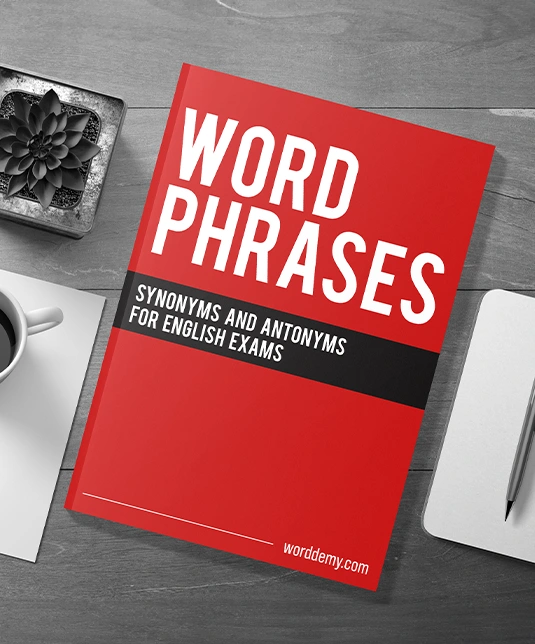
This experience inspired me to create this powerful resource ebook, to help others like you who are facing similar challenges in studying or working abroad.