Your vocabulary isn’t the problem. Your method is.
Most IELTS candidates memorise thousands of words and still plateau at Band 5.5–6.5. High scorers don’t know more words. They know how to paraphrase: the one pattern examiners reward in every part of the test.
One-time payment · instant download · secure checkout by Gumroad
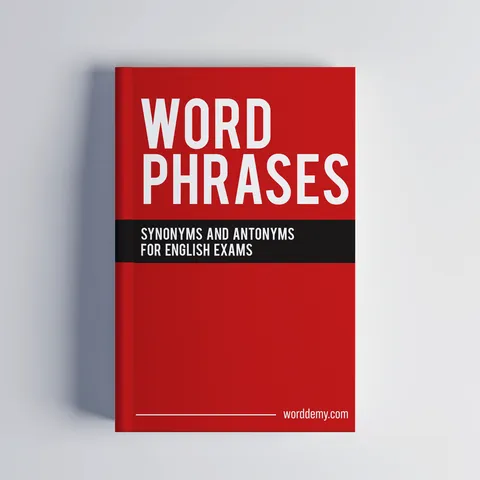
- word phrases
- 1000+
- word phrases
- exam topics
- 38
- exam topics
- synonym & antonym pairs
- = / ≠
- synonym & antonym pairs
- any device, printable
- any device, printable
Sound familiar?
You study for months, yet you still can’t break past Band 6.5
You’re using the same basic vocabulary as everyone else. While you say “good” and “important”, high scorers use phrases that make examiners take notice. These are the five problems we see most:
Limited vocabulary range
You say “online classes” every time, when “virtual classrooms”, “digital literacy” and “online assessment platforms” would score higher for Lexical Resource.
Missing synonyms and antonyms
Reading answers are paraphrased. If you can’t see that “virtual classrooms” = “using digital platforms for teaching”, you miss the answer.
Unfamiliar academic words
Passages about “socioeconomic factors” or “ecological sustainability” slow you down and make complex ideas hard to express in essays.
Wrong word in the wrong place
“In augmented classrooms, students talk to teachers by video call” sounds advanced, but the right word is “virtual”, and examiners notice.
Learning words without context
Memorising “sustainable” helps less than knowing “sustainable development” and “sustainable energy practices”.
The fix: learn phrases in pairs
Learn every phrase together with a synonym (=) and an antonym (≠), inside a topic. That is exactly how IELTS tests vocabulary.
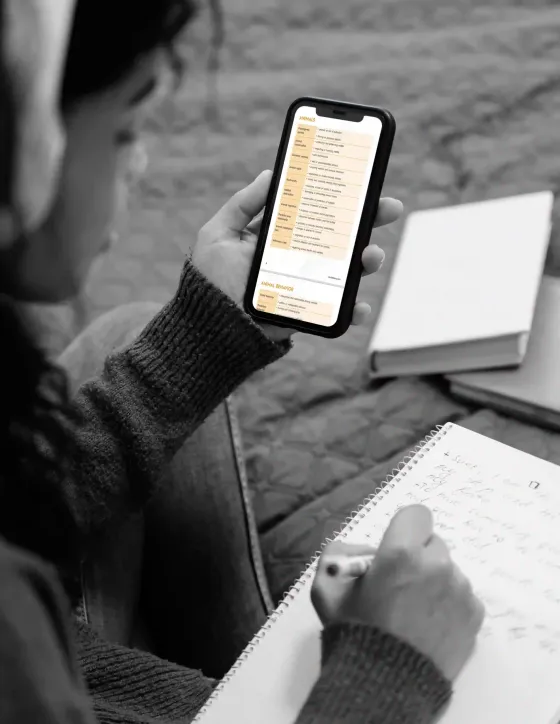
Why I wrote it
From stuck at a low band to 7.5, by changing one thing
A few years ago I needed a higher IELTS score to study abroad. No matter how hard I tried, my band stayed low. Complex vocabulary was my biggest obstacle: I spent hours on word lists that felt endless, like a maze with no exit.
Expensive courses and retakes weren’t an option. So I focused on one skill: paraphrasing with synonyms and antonyms. Rewording an idea while keeping its meaning is what IELTS checks in every section.
My understanding improved, I expressed myself better, and I raised my overall band to 7.5 in a short time. This eBook is the resource I wish I’d had.
The method in action
Every answer is hidden behind a paraphrase
An official-style Academic Reading passage. Each colour shows a phrase in the text and its paraphrase in the questions. Spot the pairs and the answers almost find themselves.
Passage
Many people fear swimming in the ocean because of sharks. In some respects, this concern is well grounded – humans are poorly equipped when it comes to electroreceptive defence mechanisms. Sharks, meanwhile, hunt with extraordinary precision. They initially lock onto their prey through a keen sense of smell (two thirds of a shark’s brain is devoted entirely to its olfactory organs). As the shark reaches proximity to its prey, it tunes into electric signals that ensure a precise strike on its target.
Normally, when humans are attacked it is purely by accident. Sharks tend to “try before they buy”, taking one or two bites and then assessing the results (our sinewy muscle does not compare well with plumper, softer prey such as seals). Repeat attacks are highly likely once a human is bleeding, however; the force of the electric field is heightened by salt in the blood which creates the perfect setting for a feeding frenzy.
Questions 10–13 · No more than three words
Shark attack
A shark is a very effective hunter. Firstly, it uses its (10) ________ to smell its target. When the shark gets close, it uses (11) ________ to guide it toward an accurate attack. Humans are not popular food sources for most sharks due to their (12) ________. Nevertheless, once a shark has bitten a human, a repeat attack is highly possible as salt from the blood increases the intensity of the (13) ________.
Show answersHide answers
- 10. olfactory organs
- 11. electric signals
- 12. sinewy muscle
- 13. feeding frenzy
The same skill works in Listening, and in reverse for Writing and Speaking: say the idea in different words and your Lexical Resource score goes up.
Preview from a chapter
Every main phrase, with its = synonym and ≠ antonym
The Economics of Education: Funding and Access
| Educational equity | =ensuring all students have fair access to educational opportunities ≠perpetuating disparities in educational access |
|---|---|
| School funding | =allocating financial resources to support educational institutions ≠withholding or limiting financial support for schools |
| Financial barriers | =facing economic obstacles that hinder access to education ≠experiencing unhindered, equitable access to education |
| Public education | =providing schooling funded and operated by government entities ≠offering education through private, non-governmental institutions |
| Scholarship opportunities | =offering financial aid based on merit or need ≠lacking or limiting financial assistance for students |
| Tuition fees | =charging costs for enrolment and instruction in educational institutions ≠providing tuition-free or subsidised education |
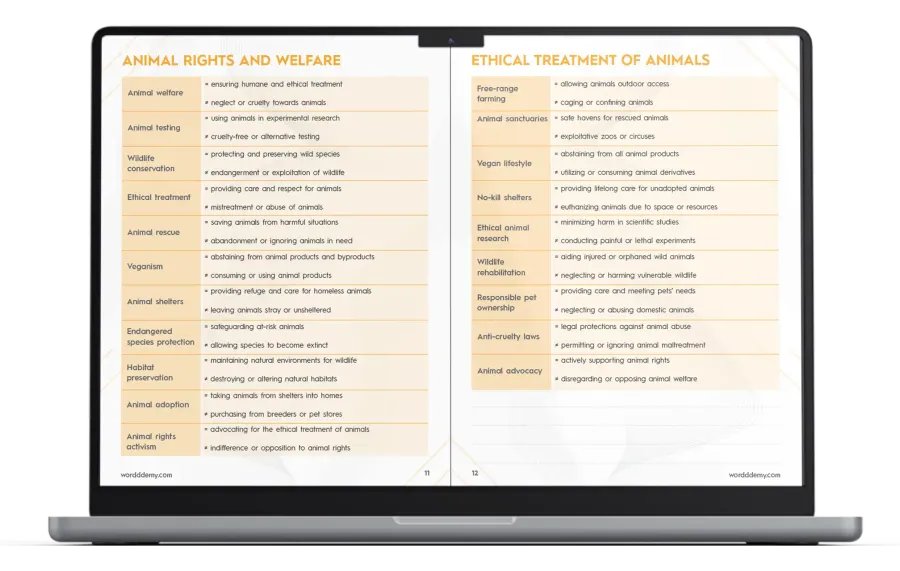
38 topics laid out like this, from education and technology to animals, health and the environment.
What's inside
Not another word list
Phrases in context
Not just word lists: every phrase sits in a topic with its meaning, so you know exactly when to use it in academic and professional settings.
Synonyms (=) and antonyms (≠)
Each main phrase comes with a similar and an opposite phrase: the paraphrasing pairs IELTS Reading and Listening are built on.
38 exam topics
Education, environment, technology, health, animals, economics and more: the topics that come up again and again.
Bonus strategy section
Common verbs and objects, determiners, comparisons, describing maps and directions, ranking, probability and quantifiers.
What you’ll get from it
Better exam performance
Spot paraphrases faster in Reading and Listening, and vary your language in Writing and Speaking.
A wider vocabulary
Topic-based phrases you can use straight away, not isolated words.
Stronger Writing
Ideas and sub-topics for each theme, so you write more expressively and accurately.
Faster Reading
Understand complex academic texts without stopping at every unfamiliar phrase.
Sharper Listening
Recognise the same idea when the speaker says it in different words.
Clearer communication
Use the right phrase in academic and professional situations, not just in the exam.
1000+ word phrases in 38 topics, ready to use in your exam
Even if you don’t buy it, try the paraphrasing method in your next practice test. It works.
Format
Study anywhere, any way you like
Instant PDF download
Works on any computer, tablet or phone. Study at home or on the go.
Easy to navigate
Clear chapters per topic. Highlight, make notes and jump straight to what you need.
Printable
Print a chapter or the whole book (215.9 × 139.7 mm) if you prefer paper for notes.
Built for focus
A consistent, colour-coded layout that keeps revision sessions short and productive.
Your gifts for IELTS Reading
A compact quick-reference section, perfect for last-minute revision:
- Common verbs & objects
- Determiners
- Comparisons with nouns
- Dependent clauses
- Describing maps & directions
- Ranking & probability
- Quantifier phrases
- IELTS strategies
Who it's for
Built for people with a goal abroad
International students
Reach the band score your university asks for and start your studies abroad.
Immigrants
Stand out in your immigration application and settle in with confidence.
Global job seekers
Professional vocabulary that makes a difference in an international job market.
How to study with it
- 1
Set a weekly target
For example two topics a week. Small, concrete goals beat “learn vocabulary”.
- 2
Write phrases by hand
Note each phrase with its = and ≠ pair and your own example sentence. Handwriting helps memory.
- 3
Use them the same day
Put new phrases into a practice essay, a Speaking answer or a conversation.
- 4
Review every week
Re-read your notes and test yourself: cover the right column and recall the pairs.
- 5
Practise under exam conditions
In Reading, underline the question’s key phrase and hunt for its synonym in the passage.
Frequently asked questions
What is the eBook about?
It is a topic-by-topic guide to 1000+ word phrases with their synonyms and antonyms, plus exam strategies. It helps you understand paraphrasing in Reading and Listening and use richer vocabulary in Writing and Speaking.
Who is it for?
Anyone preparing for IELTS (Academic or General Training) or another English exam, and anyone who wants better English for study or work abroad.
Is it suitable for beginners?
It is written for learners with at least an intermediate level of English (around B1 and above). It builds on the English you already have.
Is it only for IELTS?
It is written with IELTS in mind, but the vocabulary works just as well for TOEFL, PTE, Cambridge exams and academic English in general.
What format is it, and how do I get it?
A PDF that works on any computer, tablet or phone, and you can print it. Checkout is handled by Gumroad and you get an instant download link by email.
Can I see it before I buy?
Yes. Download the free sample pages to see the content and layout first.
Can I get a refund?
Because it is a digital download, we don’t offer refunds. Please check the free sample pages before buying to make sure it suits you.
What if I have a question while using it?
Just reply to your Gumroad purchase email and we will help.
Can’t decide yet?
This isn’t just a purchase. It’s an investment in your study or career abroad, and the vocabulary stays useful long after the exam.
A smart investment
One payment, cheaper than a single retake or tutoring hour.
Preview before you buy
Read the free sample pages and see the style first.
Made for IELTS
Practical, exam-focused vocabulary, not a general dictionary.
Want vocabulary practice with AI feedback too? Try the Worddemy App
Disclaimer: “Word Phrases: Synonyms and Antonyms for English Exams” is an independent eBook and is not affiliated with, endorsed by or approved by IELTS®, the British Council, IDP: IELTS Australia, Cambridge Assessment English, TOEFL® / ETS or PTE® / Pearson plc. These trademarks belong to their owners and are used only to describe the exams the eBook is designed for. Content is for educational purposes; results depend on individual effort and are not guaranteed.